Edmonton Sidewalk Bylaws Explained: The 48-Hour Rule & Your Liability
In Edmonton, the winter sidewalk maintenance of the commercial property owners and landlords is not just seasonal work—it is a legal duty. Non-compliance with the Edmonton sidewalk bylaws in snow and ice removal within the stipulated period can result in fines, enforcement actions, and heavy legal liability to the property owner. Hence, the 48-hour rule should be seen as a must-follow compliance requirement rather than a recommendation.
The moment sidewalks are untreated, the risk grows instantly. Many landlords, therefore, only realize the gravity of these bylaws after a complaint, inspection, or injury has happened.
Why Edmonton Sidewalk Bylaws Target Commercial Properties
The sidewalk bylaws of Edmonton are meant for public safety, but they also clearly indicate who is accountable. Customers, employees, delivery personnel, and the general public all contribute to the higher foot traffic on commercial sidewalks. As a result, owners of commercial properties are required to exercise higher care.
Generally, the adjacent property owner bears the legal responsibility for the sidewalk maintenance and not the tenant. Even when a third-party contractor is engaged for snow removal or it is included in the lease agreement, liability often stays with the landlord. Hence, depending on tenants or informal arrangements can open up unnecessary exposure.
The 48-Hour Rule: Where Non-Compliance Becomes Negligence
The 48-hour snow removal rule in Edmonton requires sidewalks to be cleared within 48 hours after snowfall ends. Once this window has passed, the sidewalk is officially considered non-compliant.
This timeframe is critical because it is frequently referenced in enforcement actions and personal injury claims. If a slip-and-fall incident occurs after the deadline, negligence may be presumed. As a result, missing the 48-hour window can significantly weaken a landlord’s legal defense.
Sidewalks are expected to be cleared to bare pavement whenever possible. If ice remains, appropriate ice control measures must be applied immediately to reduce hazards.
Fines Are Only the Smallest Consequence
Many property owners believe that the worst outcome of non-compliance is a fine. In reality, fines are only the beginning.
When sidewalks are not cleared:
Warning notices may be issued
City crews may be dispatched to clear the sidewalk
Clearing costs are charged back to the property owner
Administrative fees are added
However, these costs are minimal compared to potential injury claims. Once a pedestrian is injured, legal expenses, insurance claims, and settlement costs can escalate quickly. In many cases, what started as neglected sidewalk clearing results in long-term financial consequences.
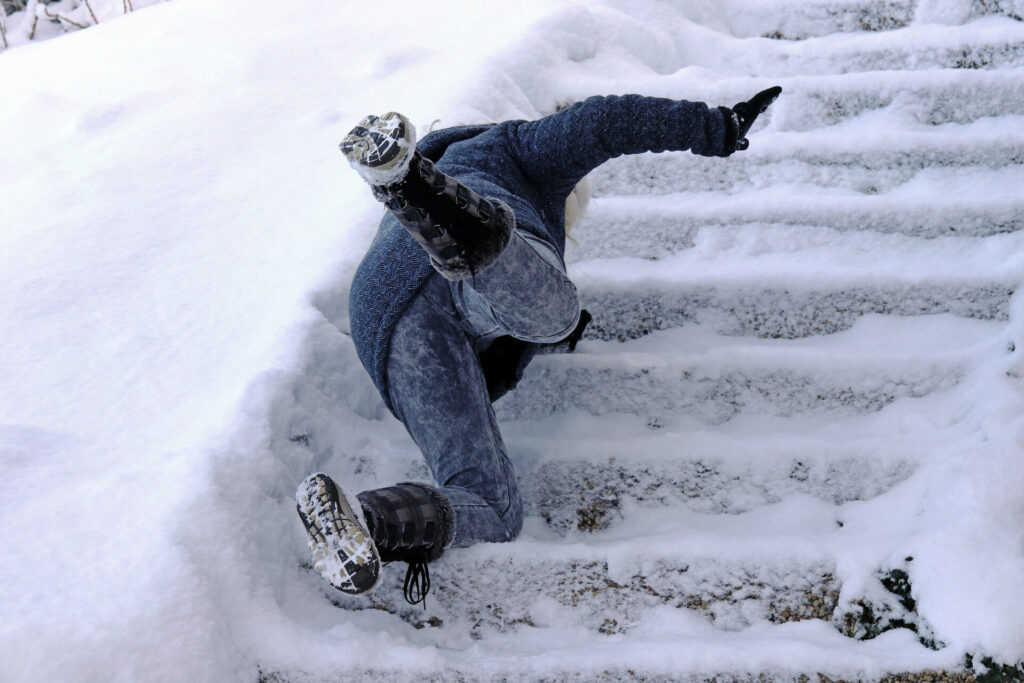
Slip-and-Fall Liability: A Real and Growing Risk
Whether "reasonable care" was taken or not, usually determines the sidewalk liability in Edmonton. The case of reasonable care having been established becomes increasingly difficult in the event that snow or ice has not been removed within the 48-hour limit.
Often, the owners of commercial properties are named as defendants in lawsuits along with the maintenance contractor. As a consequence, the mere act of outsourcing snow removal does not remove the risk. Service quality, consistency, and documentation play an important role.
The emphasis on and scrutiny for high-traffic commercial areas is even greater. It is a common understanding that shopping malls, office buildings, medical facilities, and rental units should have a safe walkway all the time. When this understanding is not fulfilled, the liability risk goes up.
Why Ice Control Is Critical for Compliance
The mere clearing of snow does not guarantee compliance with the bylaw. The dangers of ice will be there even after the sidewalks have been shoveled during the freeze-thaw cycles that are common in Edmonton. Hazardous conditions may still be attributed to the fact that no ice control was applied.
Traction materials such as sand, salt or other approved ones should be applied regularly, especially when the temperature is fluctuating. Besides, reapplication might be necessary after melting, refreezing, or heavy pedestrian use. If ice hazards are ignored, liability remains—even if snow was initially cleared on time.
Documentation Can Protect — or Hurt — Your Case
Regarding commercial landlords, compliance means not only doing what is necessary but also proving it. The use of maintenance logs, service reports, timestamps, and invoices can be very crucial for claiming defense.
If there is no documentation, it is going to be presumed that no reasonable effort has been put forth. Thus, inconsistent or undocumented service can be just as risky as no service at all. Professional sidewalk maintenance programs guarantee that compliance will be demonstrated if required.
The Cost of Delayed Action
A new liability window opens with every snowfall. Understaffing, missed calls, or poor planning are the delays that can keep sidewalks unmaintained. Therefore, the often reactive maintenance does not even meet the minimum requirements of commercial risk standards.
Proactive planning, scheduled service, and reliable response times are not only more effective but also less costly than dealing with enforcement actions or injury claims after the fact.
Final Warning for Commercial Property Owners
The bylaws for Edmonton sidewalks are strictly enforced, and the 48-hour rule is well-known. Fines, lawsuits, increased insurance premiums, and negative publicity are the hardships that commercial landlords can face because of noncompliance.
Neglecting the sidewalk obligations is nothing less than a bad bet. Professional sidewalk clearing and continuous ice control are risk management essentials—not optional services.
Do not take the risk of a fine. Request a quote for a compliant sidewalk service now.